


Inflammation often contributes to muscle and joint discomfort in horses, and supporting the body’s natural inflammatory balance—particularly through antioxidants—is often more effective than relying solely on traditional joint supplements.
This content is educational and physiologic in scope. It does not replace veterinary diagnosis or treatment.
Inflammation is a normal and necessary biological response to exercise, tissue stress, and microtrauma. In performance horses, however, repeated or unmanaged inflammation can contribute to:
Muscle soreness and stiffness (and tying up)
Delayed recovery after work
Reduced range of motion
Secondary joint discomfort
Performance inconsistency
In many cases, joint pain is not caused by structural joint damage alone, but by inflammatory processes affecting surrounding tissues, synovial environments, and neuromuscular function.
• Which support does my horse need?
Joint supplements often focus on cartilage, synovial fluid, or joint lubrication. While these may be appropriate in specific conditions, they do not address one of the most common upstream drivers of discomfort: systemic and exercise-induced inflammation.
When inflammation persists:
Muscles surrounding joints may remain tight or fatigued
Biomechanics can become altered
Normal joint motion may be restricted
As a result, horses may show signs of joint pain even when joint structures appear normal on examination.
Exercise and workload increase metabolic activity within muscle cells. This process naturally produces reactive oxygen species (ROS). When ROS production exceeds the body’s ability to neutralize them, oxidative stress occurs.
Oxidative stress can:
Prolong inflammatory signaling
Delay muscle recovery
Increase tissue sensitivity
Contribute to chronic low-grade inflammation
Over time, this environment can affect not only muscles, but also tendons, ligaments, and joints.
Antioxidants help neutralize excess reactive oxygen species, supporting the body’s ability to regulate inflammation appropriately.
Rather than eliminating inflammation—which is neither possible nor desirable—antioxidants help:
Shorten the duration of post-exercise inflammation
Support normal cellular recovery processes
Reduce cumulative inflammatory burden
This allows tissues to recover efficiently between training sessions.
By supporting inflammatory balance at the cellular level, antioxidants can indirectly support joint comfort and mobility.
This occurs through:
Reduced muscle tension surrounding joints
Improved recovery of periarticular tissues
Support of normal movement patterns
In these cases, joint comfort improves not because the joint itself is being supplemented, but because the inflammatory environment affecting the joint has been addressed.
Pharmaceutical anti-inflammatories suppress inflammatory pathways and can be appropriate in acute or severe cases under veterinary supervision. However, they are not designed for long-term daily use in performance horses.
Nutritional antioxidants differ in that they:
Do not mask pain
Do not interfere with diagnostic evaluation
Are suitable for long-term management when used appropriately
This makes antioxidant-based nutritional support a valuable component of preventive and recovery-focused programs.
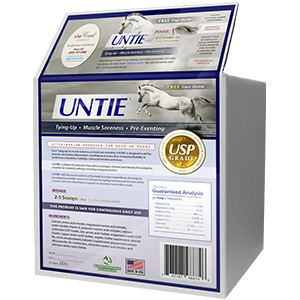
Untie® contains antioxidants selected to support:
Cellular recovery following exercise
Management of exercise-related oxidative stress
Normal inflammatory balance
Within a comprehensive management plan, these antioxidants help support muscle recovery and may contribute to improved comfort and performance consistency.
Untie® is not a treatment for joint disease or inflammation-related conditions, but a nutritional support product intended to complement training, nutrition, and veterinary care.
Joint supplements may be indicated when:
Structural joint changes are present
Cartilage or synovial support is specifically required
A veterinarian recommends joint-targeted nutritional support
In many performance horses, however, addressing inflammation and recovery upstream may reduce the need for joint-specific supplementation.
Inflammation is a common contributor to muscle and joint discomfort
Joint pain is not always caused by joint damage
Oxidative stress can prolong inflammatory responses
Antioxidants support normal inflammatory balance and recovery
Improving inflammatory control can enhance joint comfort indirectly
This content is provided for educational purposes only. It is not intended to diagnose, treat, cure, or prevent disease. Always consult a licensed veterinarian regarding lameness, joint pain, or inflammatory conditions in horses.