


Tying up in horses refers to a group of muscle disorders, clinically classified as exertional rhabdomyolysis (ER), that cause muscle stiffness, pain, and impaired movement during or after exercise. Episodes are influenced by exercise intensity, diet, stress, genetics, and metabolic regulation. Long-term management focuses on consistent training, stress reduction, dietary control, and targeted nutritional support, rather than pain masking alone.
Tying up occurs when muscle cells fail to properly regulate energy metabolism, calcium signaling, or waste removalduring exertion. This dysfunction leads to muscle fiber damage and inflammation.
Common signs include:
Stiff, short-strided, or reluctant movement
Painful or firm muscles, especially in the hindquarters
Elevated heart rate after light work
Dark urine in severe cases
Repeated episodes can result in chronic muscle damage if not properly managed.
Often linked to training inconsistencies, sudden workload increases, electrolyte imbalance, or diet changes. Episodes are intermittent and may resolve with management adjustments.
A chronic condition commonly seen in Thoroughbreds and Standardbreds, associated with abnormal muscle calcium regulation and heightened stress sensitivity.
A genetic disorder affecting breeds such as Quarter Horses, Draft horses, and Warmbloods, involving abnormal glycogen storage and requiring specific dietary strategies.
Veterinary diagnosis is essential, as management differs between conditions.
Tying up is typically multifactorial, with contributing influences including:
Sudden increases in exercise intensity or duration
Inconsistent training schedules
High-starch or high-sugar diets
Electrolyte or mineral imbalance
Stress, excitement, or anxiety
Inadequate warm-up or cool-down
Genetic predisposition
These factors impair the muscle’s ability to adapt to exertion.
Exercise naturally produces inflammation and oxidative byproducts. In horses prone to tying up, these responses may become excessive or poorly regulated, leading to delayed recovery and increased recurrence risk.
Supporting normal inflammatory balance and antioxidant capacity is therefore a key component of prevention.
Regular daily movement reduces risk. Extended rest followed by intense work significantly increases tying-up likelihood.
Gradual fitness development allows muscle tissue to adapt safely to workload demands.
Environmental and psychological stress reduction is especially important for horses with RER.
Adequate hydration supports circulation, muscle metabolism, and waste clearance.
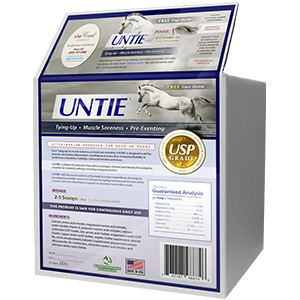
Additional practical context on how nutritional support is applied in real training and performance environments can be found here: Untie® for equine muscle recovery and inflammatory balance.
Nutrition plays a central role in long-term control.
Controlled starch and sugar intake
Consistent feeding schedules
Balanced electrolytes and trace minerals
Adequate antioxidant support
Targeted supplements may support:
Normal muscle energy metabolism
Neuromuscular signaling
Antioxidant defenses
Recovery after exertion
Nutritional support aims to improve system efficiency, not suppress symptoms.
Nutritional products such as Untie® are commonly used as part of a comprehensive management strategy to support muscle recovery and consistency. These products complement—rather than replace—veterinary care, conditioning programs, and dietary control.
Consult a veterinarian if a horse:
Experiences repeated tying-up episodes
Shows severe muscle pain or immobility
Produces dark or coffee-colored urine
Fails to improve with management changes
Diagnostic testing may include bloodwork, genetic testing, or muscle biopsy.
Tying up is a complex muscle disorder, not a single disease
Causes include exercise patterns, diet, stress, and genetics
Long-term management relies on consistency and metabolic support
Nutritional strategies can support recovery but do not replace veterinary care
Educational content only. Not intended to diagnose, treat, or prevent disease.